
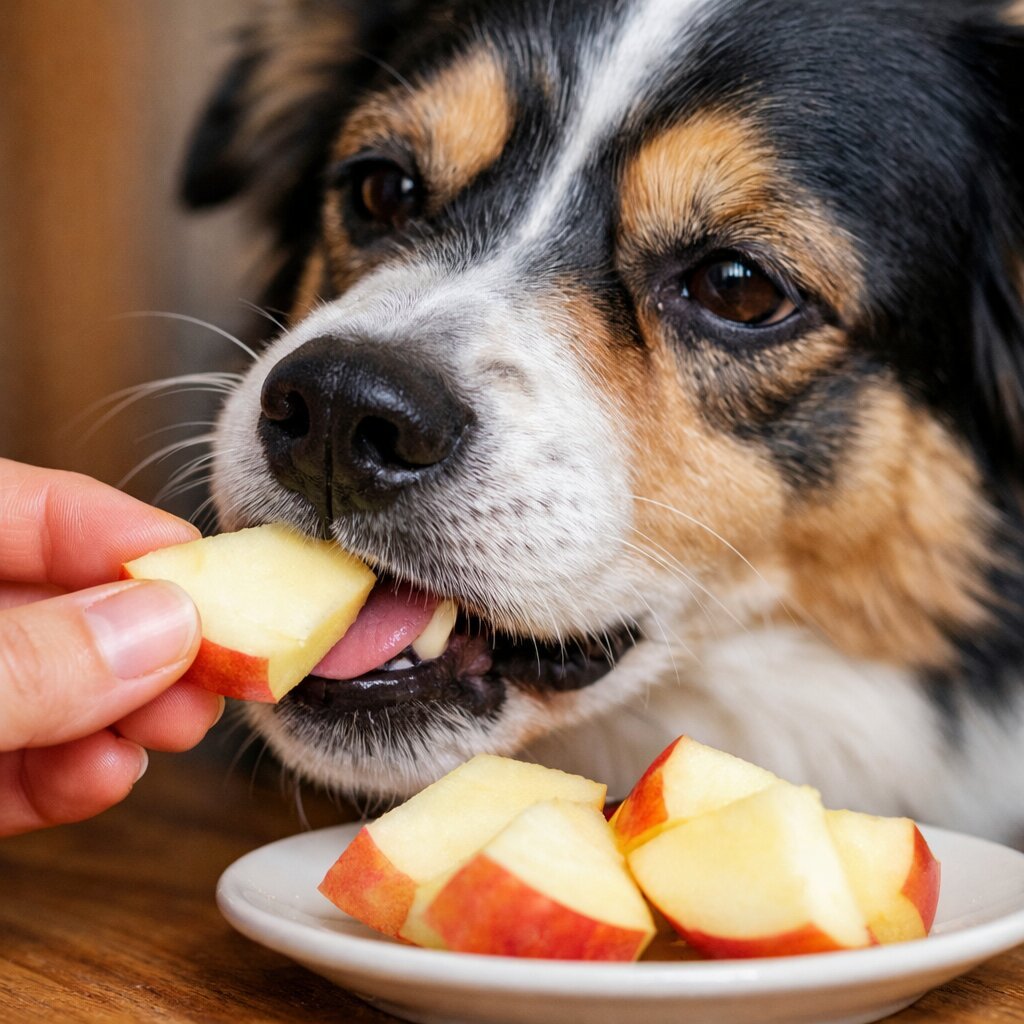
Can Dogs Eat Apples? Safety and Feeding Guide
Yes, dogs can eat apples safely when they are prepared correctly and served in moderation. Apples contain fiber, vitamins, and antioxidants that support digestion, immune function, and overall health. They are not essential to a dog’s diet but work well as occasional healthy treats.
However, safety depends entirely on preparation and portion control. Certain parts of the apple, such as seeds and the core, are dangerous. Excess feeding can also cause digestive problems due to sugar and fiber content.
Apples should always be considered supplemental treats, not replacements for complete and balanced dog food.
Are Apples Safe and Healthy for Dogs?
Apples are safe for most dogs and provide several nutritional benefits when fed properly. They contain important nutrients that support basic body functions.
Key nutrients in apples include:
- Fiber: Helps regulate digestion and supports healthy bowel movements
- Vitamin C: Supports immune system and protects cells from damage
- Vitamin A: Supports healthy skin, coat, and vision
- Antioxidants: Help reduce inflammation and protect against cellular damage
- Water content: Helps maintain hydration
These nutrients support maintenance of health but do not replace essential nutrients found in dog food.
Apples are especially useful as low-calorie treats for dogs that require weight control. Compared to commercial treats, apples contain fewer calories and less fat.
Despite these benefits, moderation is necessary. Apples contain natural sugar. Excess sugar can cause digestive upset, blood sugar spikes, and weight gain if fed too often or in large amounts.
Can Dogs Eat Green Apples and Other Apple Types?

Dogs can eat green apples safely. Green apples and red apples are both safe when prepared correctly.
There are minor differences between apple types:
- Green apples contain slightly less sugar
- Green apples have higher acidity
- Red apples taste sweeter
- Both provide similar nutritional benefits
Higher acidity in green apples may cause mild stomach irritation in sensitive dogs, but most dogs tolerate them without problems.
The type of apple does not change the safety rules. All apples must be washed, and seeds and core must be removed.
Risks and Dangers of Feeding Apples to Dogs
Apples are safe only when dangerous parts are removed. Certain parts of the apple create serious health risks.
Apple Seeds Are Toxic
Apple seeds contain a compound called amygdalin, which releases cyanide when digested. Cyanide interferes with oxygen transport in the body.
Small accidental consumption rarely causes poisoning, but repeated or large consumption increases risk.
Always remove all seeds completely before feeding apples.
Apple Core Creates Choking and Blockage Risk
The core is hard and difficult to chew. It can cause:
- Choking
- Intestinal blockage
- Digestive obstruction
This risk increases in small dogs. Always remove the core entirely.
Excess Apple Causes Digestive Problems
Feeding too much apple leads to digestive stress due to fiber and sugar content.
Common symptoms include:
- Diarrhea
- Vomiting
- Gas
- Stomach discomfort
These symptoms result from overfeeding, not apple toxicity.
How to Safely Prepare and Feed Apples to Dogs
Proper preparation removes almost all risks associated with apples.
Safe preparation steps:
- Wash the apple thoroughly to remove pesticides and dirt
- Remove the stem
- Cut the apple into sections
- Remove all seeds and core completely
- Slice into small, manageable pieces
Small pieces reduce choking risk and improve digestion.
Safe ways to serve apples include:
- Raw apple slices
- Mashed apple without additives
- Frozen apple slices as occasional treats
Frozen apples help cool dogs in hot weather and provide chewing enrichment.
Unsafe apple products include:
- Apple pie
- Apple jam
- Apple juice with sugar
- Apples with spices, sugar, or artificial sweeteners
Additives and sugar make these products unsafe.
How Much Apple Can Dogs Eat?
Proper portion size prevents digestive problems.
Safe portion guidelines:
- Small dogs: 1 to 2 slices
- Medium dogs: 3 to 4 slices
- Large dogs: up to half an apple
Apples should be fed occasionally, not daily.
Treats, including apples, should not exceed 10 percent of a dog’s total daily calorie intake.
Puppies can eat apples but require smaller portions and close monitoring because their digestive systems are still developing.
FAQ Section
Yes. Apple skin is safe and contains beneficial fiber and nutrients. Always wash thoroughly before feeding.
Yes. Green apples are safe when seeds and core are removed. They provide similar benefits as red apples.
No. Apples should be occasional treats. Daily feeding may cause digestive imbalance and excess sugar intake.
Yes. Apple seeds contain compounds that release cyanide. Always remove seeds before feeding apples.
Yes, but only plain cooked apples without sugar, spices, or additives.
Conclusion
Apples are safe and healthy treats for dogs when served properly. They provide fiber, vitamins, antioxidants, and hydration support. However, safety depends on removing seeds and core, serving small portions, and avoiding processed apple products.
Moderate feeding ensures nutritional benefits while preventing digestive problems. Proper preparation eliminates toxicity and choking risk, making apples a safe occasional treat for most dogs.